

🚀 Digital Revolution 2026: How Technology is Reshaping Our World
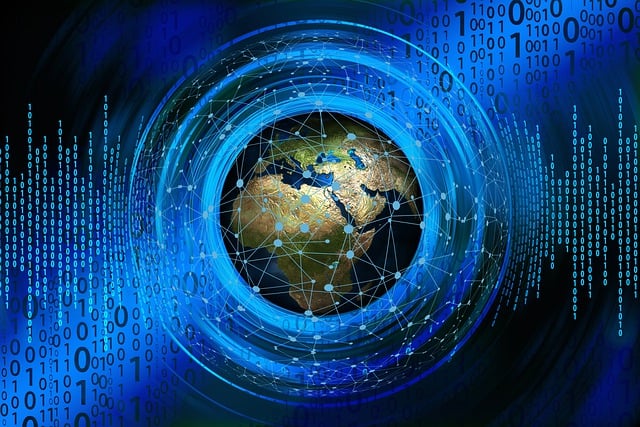
In the blink of an eye, our world has transformed. From the palm-sized supercomputers we call smartphones to the invisible web of data surrounding us, we're living through an unprecedented era of digital evolution. But how deep does this transformation go, and where is it taking us?
The digital revolution isn't just about gadgets and faster internet — it's about fundamentally reshaping how we live, work, communicate, and even think. Every industry, every profession, and every aspect of our daily lives is being touched by this wave of technological change.
🌍 The Global Digital Landscape
Today, over 4.9 billion people — more than 60% of the world's population — are connected to the internet. This number has skyrocketed from just 413 million in 2000, vividly showing how rapidly our world is digitalizing.
But connectivity is just the tip of the iceberg. Let's dive deeper into the key areas driving this global digital revolution:
1. Artificial Intelligence: The New Frontier
Artificial Intelligence (AI) and Machine Learning (ML) are no longer confined to sci-fi movies. They're here, reshaping industries from healthcare to finance.
- Healthcare: AI is revolutionizing diagnosis and treatment. Imagine an AI system that can detect cancer faster and more accurately than human doctors — it's already happening. AI-powered tools are analyzing medical images, predicting patient outcomes, and even discovering new drugs.
- Finance: Algorithmic trading, fraud detection, and personalized banking experiences are just a few ways AI is transforming the financial sector. AI algorithms now process millions of transactions per second, identifying patterns and anomalies that humans could never spot.
- Customer Service: AI-powered chatbots and virtual assistants are handling millions of customer queries daily, providing instant support around the clock.
2. Internet of Things: A Connected World
The Internet of Things (IoT) is turning our world into a vast, interconnected network. From smart homes to entire smart cities, IoT is changing how we interact with our environment.
- Smart Homes: Thermostats, lights, security cameras, and appliances that you can control from anywhere in the world.
- Smart Cities: Sensors monitoring traffic, air quality, waste management, and energy usage to make cities more efficient and livable.
- Industrial IoT: Factories using connected sensors to monitor equipment, predict maintenance needs, and optimize production.
📊 By 2025, it's estimated there will be over 75 billion IoT devices worldwide. That's nearly 10 devices for every person on Earth!
3. 5G: The Backbone of Digital Evolution
5G isn't just about faster internet on your phone. It's the foundation for technologies like autonomous vehicles, remote surgery, and immersive AR/VR experiences.
- Speed: 5G can deliver speeds up to 100 times faster than 4G.
- Latency: Ultra-low latency (as low as 1 millisecond) opens up possibilities like real-time remote surgery and autonomous driving.
- Capacity: 5G can handle a massive number of connected devices simultaneously — essential for the IoT world.
By 2026, global 5G coverage is expected to reach over 40% of the world's population, with major cities and industrial hubs leading the way.

4. Cloud Computing: The Digital Powerhouse
Cloud computing has revolutionized how businesses operate and how we store and access data. No longer do we need expensive on-site servers and IT infrastructure — everything is available on demand.
- Scalability: Businesses can scale their computing resources up or down instantly based on demand.
- Accessibility: Data and applications are accessible from anywhere in the world, enabling remote work and global collaboration.
- Cost Efficiency: Pay-as-you-go models mean businesses only pay for what they use.
📊 The global cloud computing market is expected to reach $832.1 billion by 2025, growing at a CAGR of 17.5%.
5. Cybersecurity: Guarding the Digital Frontier
As our world becomes more digital, protecting our data and systems becomes increasingly crucial. Cybersecurity is no longer just an IT concern — it's a boardroom priority.
- Threat Landscape: Ransomware, phishing, data breaches, and state-sponsored attacks are on the rise.
- Zero Trust Architecture: A security model that assumes no one — inside or outside the organization — can be trusted by default.
- AI in Security: AI-powered systems that can detect and respond to threats in real-time, faster than any human could.
⚠️ Cybercrime is predicted to cost the world $10.5 trillion annually by 2025, highlighting the critical importance of robust cybersecurity measures.
🌊 The Ripple Effect: Impact on Society and Economy
This digital evolution isn't just changing technology — it's reshaping our society and economy in profound ways:
- 💼 Work: Remote work, the gig economy, and AI-assisted jobs are becoming the norm. The traditional 9-to-5 office job is being redefined, with more flexibility and new ways of working.
- 📚 Education: E-learning and personalized, AI-driven education are democratizing knowledge. Students can now access world-class education from anywhere in the world.
- 🏥 Healthcare: Telemedicine and AI-assisted diagnostics are improving access to quality healthcare, especially in remote and underserved areas.
- 🌱 Environment: Smart grids, IoT-enabled conservation efforts, and AI-powered climate modeling are helping combat climate change and promote sustainability.
- 🏙️ Urban Living: Smart cities are using data to optimize everything from traffic flow to waste management, making urban life more efficient and sustainable.
🔮 Peering into the Future
As we stand on the cusp of technologies like quantum computing, brain-computer interfaces, and advanced robotics, one thing is clear: the pace of digital evolution is only accelerating.
Quantum Computing promises to solve problems in seconds that would take today's supercomputers thousands of years. Brain-computer interfaces could allow us to control devices with our thoughts. Advanced robotics could revolutionize manufacturing, healthcare, and even space exploration.
The Fourth Industrial Revolution is not just coming — it's already here. And its potential is limited only by our imagination.
💡 The future isn't something we enter. The future is something we create. The digital revolution gives us the tools — it's up to us to use them wisely.
⚠️ Challenges on the Horizon
Despite the incredible potential, the digital revolution also brings significant challenges that we must address:
- Digital Divide: Nearly 40% of the world's population still lacks internet access. Bridging this gap is essential to ensure everyone benefits from the digital revolution.
- Privacy Concerns: As we generate more data than ever before, protecting personal privacy becomes increasingly complex and critical.
- Job Displacement: AI and automation are expected to replace some jobs while creating others. Preparing the workforce for this shift is a major challenge.
- Ethical AI: Ensuring AI systems are fair, transparent, and free from bias is a growing concern for developers and regulators alike.
- Environmental Impact: The energy consumption of data centers and digital infrastructure is significant — making green technology a priority.
📝 Final Takeaways
- ✅ The digital revolution is real and accelerating — it's transforming every industry and aspect of our lives.
- ✅ Key technologies driving change: AI, 5G, IoT, cloud computing, and cybersecurity.
- ✅ Benefits are massive: Better healthcare, more efficient cities, democratized education, and sustainable solutions.
- ✅ Challenges exist: Digital divide, privacy, job displacement, and ethical concerns must be addressed.
- ✅ The future is ours to shape — embracing technology wisely will determine the world we leave for future generations.
💡 Remember: Technology is a tool. Its impact depends on how we choose to use it. The digital revolution offers unprecedented opportunities — let's make sure we use them for the greater good.
References:
- International Telecommunication Union — Global Connectivity Report, 2025.
- World Economic Forum — The Future of Jobs Report, 2025.
- Gartner — Cloud Computing Market Forecast, 2025.
- Cybersecurity Ventures — Cybercrime Damage Prediction, 2025.
- Statista — IoT Connected Devices, 2025.
📸 Images sourced from Google Docs, Pixabay, and Blogger. Used for editorial purposes.
